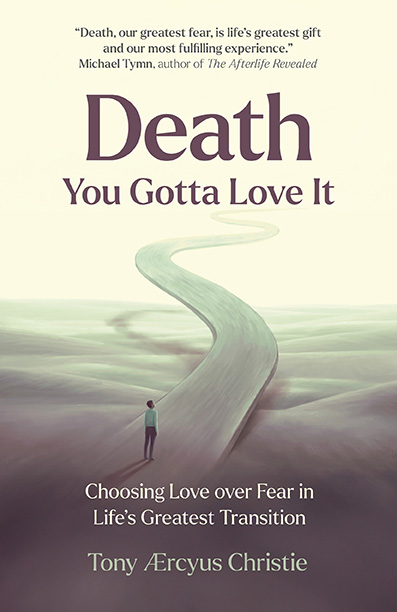
The Story Behind 'Death — You Gotta Love It
Death — You Gotta Love It was not a book I casually decided to write. It took years of inner questioning, deep reflection, and a profound personal journey before I felt ready to put these words on the page.
The spark came more than a decade ago during meditation, when an unexpected thought entered my mind: what if I truly contemplated my own death? That single moment opened a door I could not close. What followed was a searching, often confronting, always fascinating exploration of death — not only as an ending, but as a mystery that can transform the way we live.
At first, I met the subject with the same unease many people feel. There was fear, hesitation, and even the old warning that speaking about death somehow invites it closer. But I was also discovering a powerful truth in my life: that so much of what we think, say, and do comes either from fear or from love. Again and again, I found myself choosing love over fear—and that changed everything.
Very early in the writing process, the title arrived with absolute clarity: Death — You Gotta Love It. It is bold, provocative, and impossible to ignore. It may surprise people, unsettle them, or make them smile—but that is precisely the point. This book invites readers to question everything they have been taught to fear about death and to consider a radically different, deeply liberating perspective.
Death — You Gotta Love It does more than challenge our ideas about death. It also invites us to rethink life itself. It shifts the focus beyond the purely physical and opens up a bigger vision of who we are—conscious beings, far greater than the narrow limits of the material world, with possibilities that stretch far beyond what we usually imagine.
I have several books at different stages of completion, yet every time I became still and asked which one I was meant to focus on, the same answer returned: the death book. It was as if this subject would not let go until I had followed it to its depths.
That did not mean the journey was easy. At times I resisted it. I hesitated. I wrestled with my own reservations about examining death so closely, and then with the vulnerability of writing about it for others to read. In many ways, writing this book required me to face not only the idea of death, but my full emotional response to it.
Along the way, I immersed myself in the subject, reading around a hundred books that explored death from many different angles — spiritual, practical, philosophical, and deeply human. That research broadened and deepened my understanding, but it also confirmed that this was not simply a topic to study. It was a truth to be lived.
This is not primarily a book about grief, nor is it intended to replace the many excellent works written by grief specialists. Yet grief is part of the landscape of death, and writing those chapters on grief took time, care, and honesty. I am deeply aware that for anyone who has recently lost a loved one, grief must be allowed its own sacred course. Even so, within these pages are reflections, practices, and stories that may bring comfort, introduce a new perspective, and provide gentle reassurance.
Although the title places death front and centre, this book is, at its heart, about life — how to live more fully, more consciously, and more fearlessly. It is about learning to die well so that you can truly live well. If the subject of death has ever stirred your curiosity, challenged your beliefs, or quietly called for your attention, Death — You Gotta Love It may open a door you did not expect — but may be very glad you walked through.